
.avif)
.svg)

Back
Sustainability
The Lusiaves Group's energy strategy
The Galp Gas & Power Summit and the Lusiaves Group's commitment to the energy transition and sustainability in the agri-food sector.

Lusiaves Group
.svg)
30.10.2025

1 min read

Heading 1
Heading 2
Heading 3
Heading 4
Heading 5
Heading 6
Lorem ipsum dolor sit amet, consectetur adipiscing elit, sed do eiusmod tempor incididunt ut labore et dolore magna aliqua. Ut enim ad minim veniam, quis nostrud exercitation ullamco laboris nisi ut aliquip ex ea commodo consequat. Duis aute irure dolor in reprehenderit in voluptate velit esse cillum dolore eu fugiat nulla pariatur.
Block quote
Ordered list
- Item 1
- Item 2
- Item 3
Unordered list
- Item A
- Item B
- Item C
Bold text
Emphasis
Superscript
Subscript
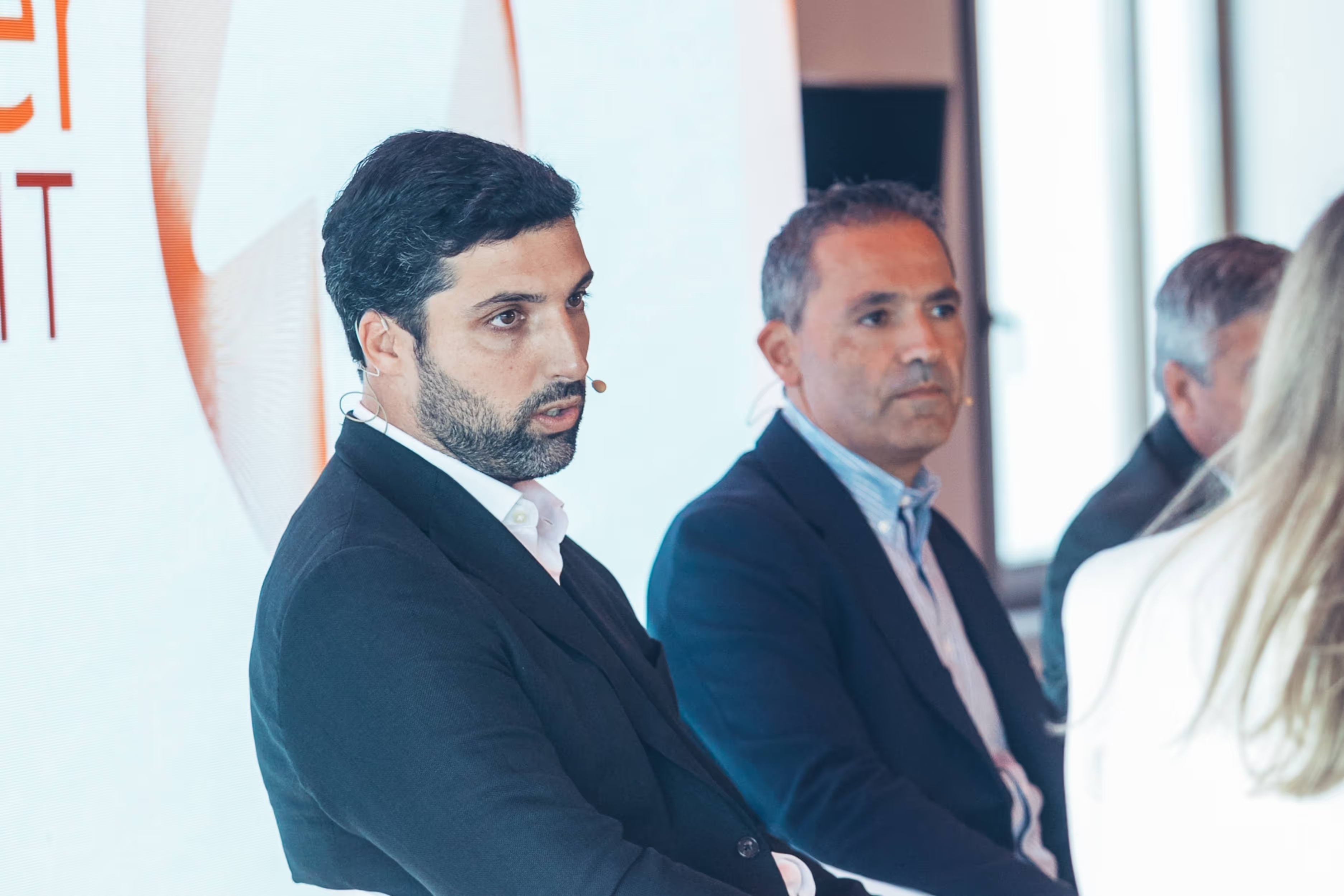
The Lusiaves Group was invited to participate in a roundtable at the Galp Gas & Power Summit, an initiative that brings together companies and experts to discuss the future of energy and sustainability. This participation reinforces the Group's commitment to energy transition and sustainability in the agri-food sector.
The transition to a low-carbon energy model is a strategic priority for the Lusiaves Group. Rather than simply reacting to change, we seek to lead the sector's transformation by balancing productivity, profitability, and environmental responsibility.
Hélder Abreu, Asset Maintenance Director, explained that the Lusiaves Group's main energy challenges involve balancing productivity, profitability, and sustainability, transforming a sector traditionally intensive in fossil energy into a low-carbon, resilient, and technologically advanced model.
To overcome these challenges, the Lusiaves Group is investing in self-generated energy, efficiency, and innovation. We produce a large portion of the energy we consume, are converting plants to use biomass and low-impact gases, are investing in electric and hybrid fleets, and are promoting a circular economy by repurposing by-products and reducing waste.
The future lies in collective self-consumption projects, energy storage, and the use of renewable gases, such as biomethane and green hydrogen, reversing our current dependence on fossil fuels. This strategy demonstrates that it is possible to lead by example, uniting sustainability and growth in the agri-food sector.
Share:
Tags:
Lusiaves Group
.svg)

.avif)

.svg)